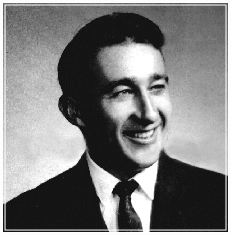
Marvin Otto Herzog werd 9 augustus 1932 geboren op een boerderij in Frankenmuth,
Michigan, als zoon van Otto en Clara Brenner Herzog. Muziek speelde een belangrijke
rol in de Herzog woning. Het gezin genoot samen met hun vrienden vele avonden met
het zingen van oude Duitse nummers die al generaties lang in de familie waren. De
meeste zaterdagavonden zat de familie Herzog in de keuken, ze luisterden naar de
radio die afgestemd was op de Grand Ole Opry, live uit Nashville, Tennessee. Op zondagmorgen
na de kerk, stemden ze af op het WFDF radiostation in Flint, Michigan, voor de Polka
Show. Uit deze vroege begintijd, de oude Duitse nummers van zijn vader, de country
muziek van de Grand Ole Opry, en de polka's en walsen van WFDF ontstond de stijl
van de muziek die uniek is "De Marv Herzog Sound." Toen Marv twaalf jaar oud was
had hij een buurman die hoorde dat Marv de gave had om piano te spelen op gehoor.
De buurman maakte hem wegwijs op een een full-size achtenveertig bas piano accordeon.
Marv oefende elke dag een uur op het instrument. Hij leerde de nummers door zich
te proberen te herinneren hoe dat klonk, hij oefende net zolang tot hij het nummer
in de goede toonsoort kon spelen. Tijdens de zomer en herfst van 1946 speelde Marv
steeds meer accordeon. De G.B.U. Club in Birch Run huurde hem in op 31 december 1946,
en dat was het eerste betaalde optreden voor de band. Met dat geld in zijn zak begon
Marv te dromen over een eigen nieuwe accordeon en meer boekingen. Marv richtte alvast
het Herzog Trio op. Marv speelde accordeon, zijn zus Hilda speelde gitaar, en zus
Verna speelde contrabas en piano. In 1963 kocht Marv zijn eerste Cordovox, een combinatie
accordeon/orgel met een elektronische bas. Dat nieuwe instrument bleek de katalysator
die Marv voortbewoog. Hij kreeg grotere populariteit dan hij ooit had gedacht. Marv
en de band ontvingen uitnodigingen om ook buiten de regio van Michigan op te treden.
Ze traden op in Ohio, Pennsylvania, en enkele andere oostelijke staten van Amerika.
De voertuigen van toen die de band moesten vervoeren varieerden van sedans in de
jaren veertig en vijftig, naar station wagens, bestelwagens, campers en aanhangwagens
in de jaren zestig en zeventig. Een grote Greyhound bus werd aangeschaft in de jaren
tachtig, in 1993, stond er anderhalf miljoen kilometers geregistreerd op de kilometerteller.
Marv kocht een nieuwe nog grotere Greyhound bus om heel Amerika door te reizen van
Texas en Arizona tot Maryland en Pennsylvania. Marv's stijl van muziek trok mensen
aan uit vrijwel elke staat. Door een grotere bus kon de band meer en comfortabeler
reizen dan ooit tevoren. In 1975 begon Marv aan gesponsorde tournees naar Europa,
Hawaii, en het Caribische gebied. Marv en z'n muziek staken de Atlantische Oceaan
over, de Europeanen vonden het prachtig. Zijn populariteit bleef maar stijgen in
Amerika. In 1979 werd hij geëerd door The International Polka Association, Marv werd
opgenomen in de Polka Music Hall of Fame in Milwaukee, Wisconsin, het trok een record
aantal bezoekers uit het hele land. In 1985 werd Marv opgenomen in de Michigan Polka
Music Hall of Fame. Daarnaast werd Marv bekroond door vele andere polka organisaties,
clubs en festivals voor zijn grote bijdrage aan de polka muziek. Marv was gezegend
met een buitengewoon goed gehoor. Door dat absolute gehoor was hij in staat heel
gemakkelijk nieuwe songs te leren en te onthouden. Het was zijn wens al die liedjes
te spelen op het podium om zo de mensen vermaken. Nagenoeg iedereen is het er wel
over eens Marv Herzog dit uitzonderlijk goed deed. Omringd door zijn familie overleed
Marv Herzog na een langdurig ziekbed vredig thuis op 12 december 2002. Hij werd 70
jaar.